Calling another country for the first time can feel weirdly intimidating. All
those extra digits, the mysterious +, the "do I dial 011 or not?" panic. But
international dialing follows one simple, repeatable pattern. Learn it once and
you can call basically anywhere.
Let's decode it.
The international dialing formula
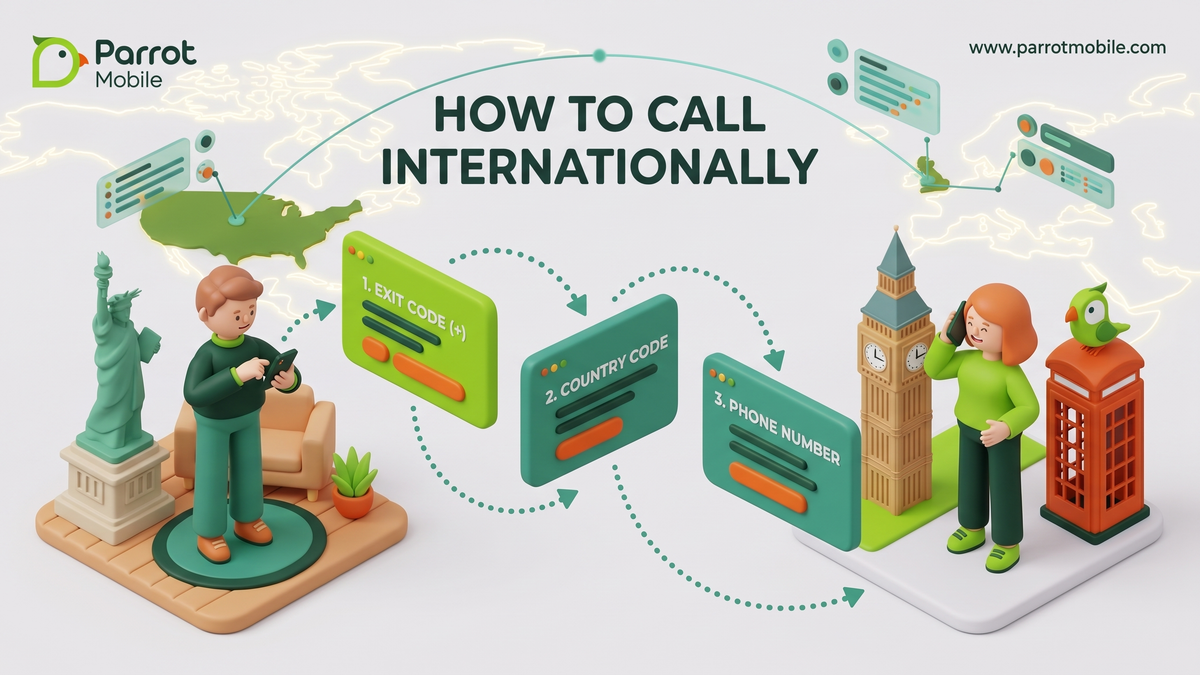
Every international call from the US is built from three parts in this order:
Exit code → Country code → Phone number
Here's what each piece means:
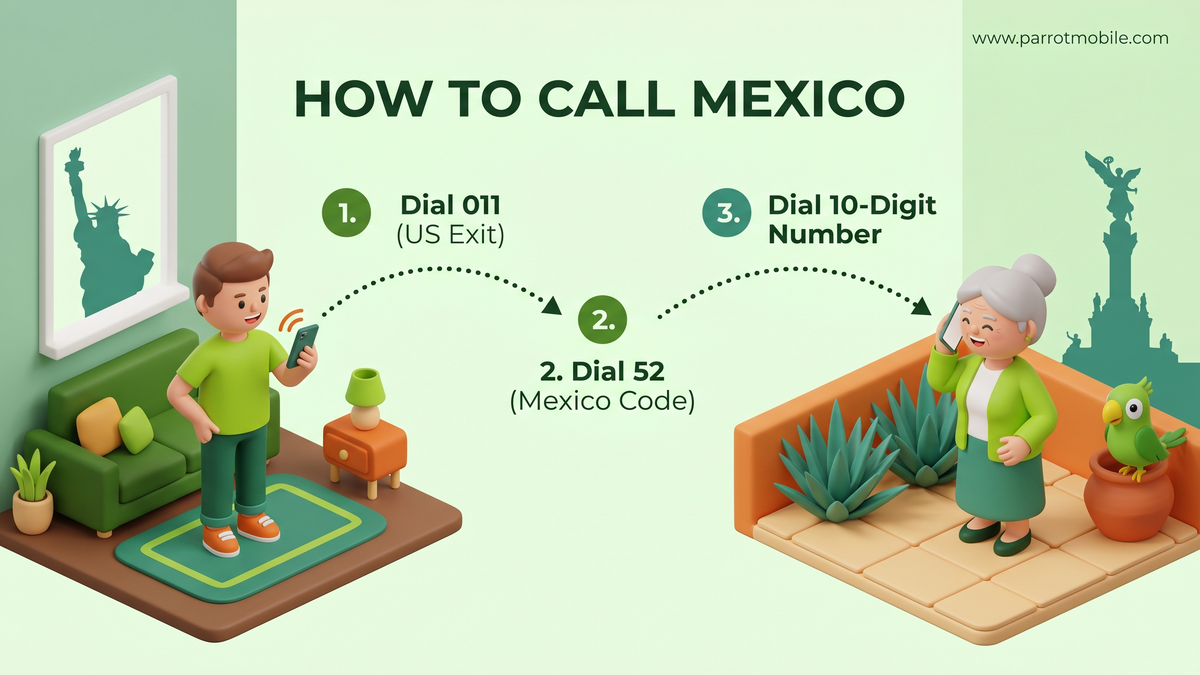
- Exit code (011): This tells the US phone network "hey, this call is leaving the country." From the US, the exit code is always 011.
- Country code: A 1-to-3 digit code that identifies the destination country - like 52 for Mexico, 44 for the UK, or 91 for India.
- The local phone number: The actual number you're calling, usually without the leading 0 some countries write in their local format.
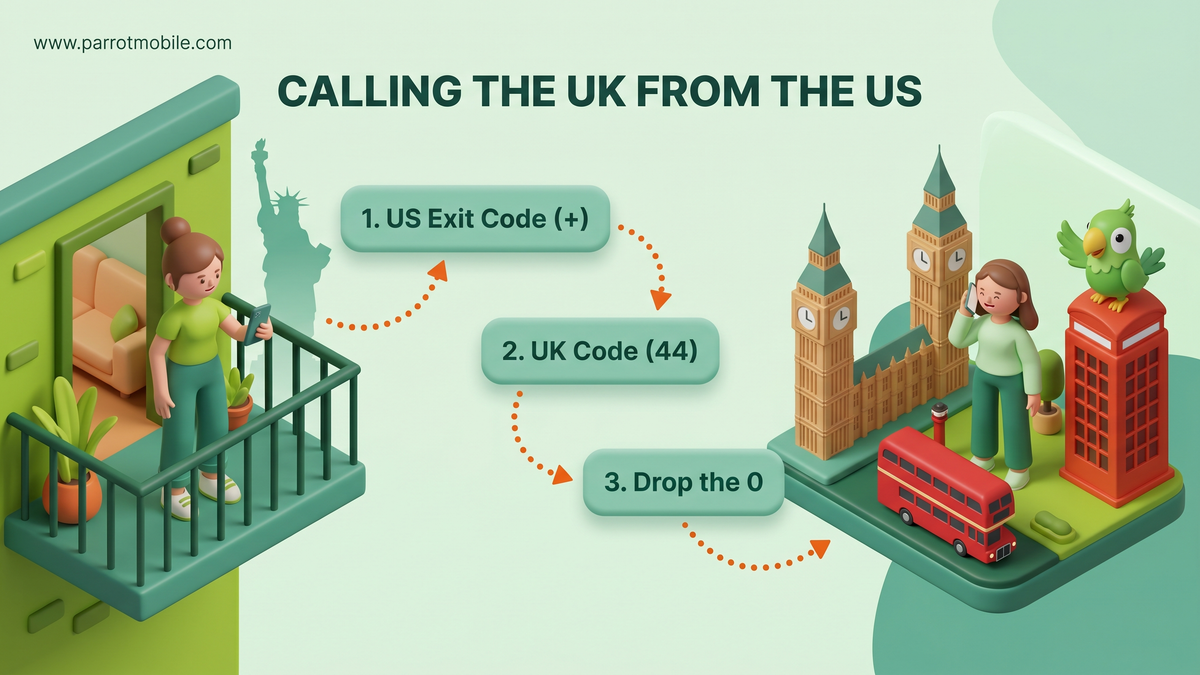
So a call to a London number might look like:
011 + 44 + 20 7946 0958
Dialed straight through, that's 0114420794609958.
The magic shortcut: just use +
Here's the part that makes life easier. On any mobile phone, you can replace
that 011 exit code with a simple + sign. To type it, press and hold the
0 key on your dialer until a + appears.
So instead of memorizing exit codes, you just dial:
+44 20 7946 0958
Your phone figures out the rest. This is why phone numbers you see online are
usually written with a + - it's the universal "this is an international number"
symbol that works from almost any country, not just the US.
Pro tip: Save your international contacts in
+country codeformat (like+52 ...). Then you can call them with one tap whether you're home or abroad, with no re-dialing gymnastics.
A few common country codes
To get you started:
| Country | Country code | Dial (using +) |
|---|---|---|
| Mexico | 52 | +52 |
| United Kingdom | 44 | +44 |
| India | 91 | +91 |
| Philippines | 63 | +63 |
| Germany | 49 | +49 |
| Canada | 1 | (see note below) |
Wait, what about Canada and the Caribbean?
Here's a fun curveball: Canada and many Caribbean nations share the country code
1 with the US, as part of the North American Numbering Plan. That means you
dial them just like a regular US long-distance call - 1 + area code +
number - no 011 needed. Convenient!
Don't forget the time zone
Not a dialing rule, but a friendship-saving one: before you call, do a quick mental time-zone check. The UK is about 5 hours ahead of US Eastern; India is 9.5 hours ahead. A 9 PM call from New York is a 2 AM wake-up in London. 🙃
Calling abroad with Parrot Mobile
International calling is built right into Parrot Mobile. Many destinations are included free on plans with talk minutes, and everywhere else is billed at affordable per-minute rates with no connection fees to surprise you.
The easiest way to see what a specific country costs is our international calling rates page - search for the country and you'll see the exact per-minute rate (or a friendly "FREE" if it's included in your plan). You can even make these calls over Wi-Fi at the same rates, which is handy when you're somewhere with spotty signal.
Once you've got the formula down - exit code, country code, number - the whole world is just a few taps away.